-0.png?w=128&h=128)
How to Build a Better Evening Routine
rivanritual
Most of us spend a lot of time thinking about how we start our day. Morning routines have become something of a cultural obsession — the cold plunges, the journaling, the perfectly curated cups of matcha.
But here is a question worth asking: what about how you end your day?
The evening hours — those quiet, often overlooked hours between dinner and bedtime — shape your sleep, your energy the next morning, and ultimately, how you experience your life. Yet for many of us, this time is either spent mindlessly scrolling, working late, or collapsing onto the couch in exhaustion.
A better evening routine is not about adding more to your plate. It is about creating a gentle transition — a way to signal to your body and mind that the day is over and it is time to rest.

Why Evenings Matter More Than You Think
Your evening habits do not just affect your sleep. They affect everything.
Psychologists have shown that certain nighttime practices can significantly improve mental health, strengthen the immune system, and even extend life expectancy. A consistent evening wind-down routine trains your body and brain to expect sleep, making it easier to fall asleep and stay asleep.
The benefits extend into the next day as well. People who are able to mentally disconnect from work in the evening report better energy, improved mood, and stronger job performance the following day. A sharper mind, less brain fog, and greater productivity are all linked to how well you wind down at night.
In short: how you end your day determines how you begin the next one.
What Actually Makes a Good Evening Routine?
A good evening routine is not about perfection. It is not about following a rigid checklist or copying someone else's elaborate protocol. The goal is calm, presence, and restful sleep.
Research on sleep hygiene suggests that predictable routines support your circadian rhythm — the body's internal clock that regulates sleep, digestion, mood, and hormone balance. When your evening follows a consistent pattern, your body learns to anticipate sleep. Melatonin is released at the right moment. Your nervous system settles. Rest becomes easier.
Here are the core elements that science and experts agree on.
1. Set a Consistent Wind-Down Time
The most fundamental step is also the simplest: go to bed at roughly the same time each night.
Your body thrives on predictability. When you maintain a regular sleep schedule — even on weekends — your circadian rhythm stays aligned. This makes it easier to fall asleep and wake up naturally.
Choose a bedtime that allows for seven to nine hours of sleep, and start your wind-down routine about 30 to 60 minutes before that. This is not about strictness. It is about giving your body a reliable signal that rest is coming.
2. Create a Tech Curfew
One of the most effective changes you can make is also one of the hardest: put down your phone.
Blue light from screens suppresses melatonin production and keeps your brain in an active, alert state. Even beyond the light, the content itself — emails, social media, news — can activate stress and anxiety right before bed.
Experts recommend setting a tech curfew 30 to 60 minutes before bed. Leave your phone outside the bedroom if possible. If you must use screens, consider blue-light-blocking glasses or switching your devices to night mode.
The evening is not the time for more information. It is the time for less.
3. Choose One Calming Ritual
You do not need a dozen steps. You need one or two things that help you shift gears.
This could be:
Reading a book — research suggests reading can cut stress levels in half in about six minutes
Taking a warm bath or shower — a Japanese study found that bathing was more effective than showering at improving mood, reducing fatigue, and lowering stress
Gentle stretching or yoga — just 10 minutes of light movement can help release endorphins and counteract the effects of sitting all day
Journaling — writing down three things that went well, no matter how small, can shift your mindset toward gratitude and calm
Listening to calming music or a podcast
The key is to pick something that feels good to you — not something you feel obligated to do. Consistency matters more than complexity.
4. Be Mindful of What You Eat and Drink
What you consume in the evening has a direct impact on your sleep quality.
Timing matters. Experts recommend eating your last meal at least three hours before bedtime. A heavy meal close to bed can lead to heartburn and indigestion, both of which interfere with restful sleep.
What you eat matters too. Avoid caffeine after lunch if it keeps you awake at night. Limit alcohol in the evenings — while it may make you feel drowsy initially, it disrupts sleep quality later in the night.
A light, balanced dinner with protein, vegetables, and sensible portions is your best bet. And if you want something warm and soothing afterward, that is exactly the kind of moment a
post-meal ritual was made for.
5. Create a Sleep-Friendly Environment
Your bedroom should be a sanctuary for sleep.
Keep the space cool, dark, and quiet. Consider using blackout curtains, an eye mask, or a white noise machine if needed. A cooler room temperature — around 65 to 68 degrees Fahrenheit — is generally ideal for sleep.
Your bed should be associated with sleep and rest — not work, not screens, not stress. If you find yourself lying awake with a racing mind, it can be helpful to get up, do something calming for a few minutes, and then return to bed when you feel sleepy.
6. Start Small and Build Gradually
The biggest mistake people make with evening routines is trying to change everything at once.
Start with just one or two steps that feel manageable. Maybe it is turning off screens 30 minutes before bed. Maybe it is a five-minute stretching routine. Maybe it is simply committing to a consistent bedtime.
Once those small changes become habits, you can add more. The goal is not a perfect evening — it is a sustainable one.

The Difference Between a Routine and a Ritual
It is worth making a distinction here.
A routine is a sequence of actions you perform. A ritual is a sequence of actions performed with intention and presence.
You can brush your teeth mindlessly — that is routine. Or you can brush your teeth while deliberately signaling to yourself that the day is over — that is ritual.
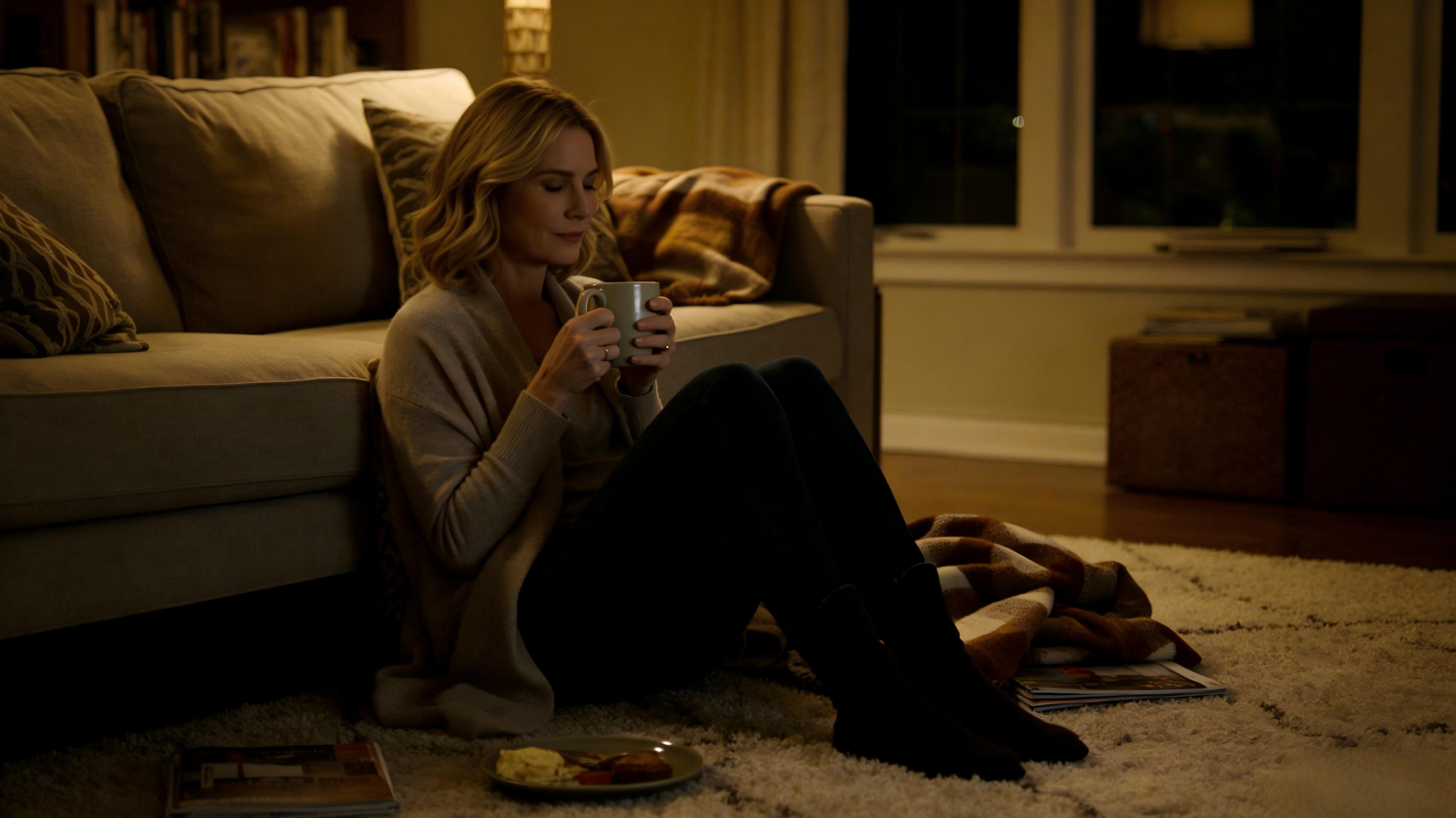
The evening is an ideal time to bring ritual into your life. Not because you need more to do, but because small, intentional moments can transform how an evening feels. A warm cup of tea becomes more than a drink. A short walk becomes more than exercise. A few minutes of stillness become more than waiting.
They become a way of saying to yourself: I am here. I am done for today. I can rest now.
A Simple Evening Routine Template
If you are unsure where to start, here is a template you can adapt to your own life.
Time Activity
After dinner Take a short walk or sit upright for 10–15 minutes to support digestion
1 hour before bed Dim the lights, put away screens, begin your wind-down
30 minutes before bed Do one calming activity — read, stretch, journal, take a warm bath
Bedtime Lights out, consistent time each night
This is not a prescription. It is a starting point. Adjust it to fit your life, your schedule, and what feels good to you.
A Better Way to End Your Evening
If you are tired of ending your nights feeling rushed, distracted, or just plain exhausted, it might be time to rethink what happens after dinner.
A thoughtful evening routine is not about doing more. It is about creating a small moment of transition — something that allows your body to digest, your mind to unwind, and your nervous system to settle.
Start with something simple. A short walk. A warm cup of something soothing. A few minutes of stillness.
Small changes often lead to the biggest improvements.
If you are curious about what a curated post-meal ritual looks like, Rivan Ritual offers a blend crafted specifically for this moment — a warm, botanical preparation to support digestive comfort and help you ease into a calm evening.
👉 Explore Rivan's post-meal ritual here
Continue Reading
If you found this article helpful, you might also enjoy these related posts:
What Is a Post-Meal Ritual? – And why it matters more than you think.
Why Am I Bloated After Dinner? – Seven common causes and how to find relief tonight.
Why Do I Feel Bloated Every Night? – Six common causes and how to break the cycle.
Frequently Asked Questions
What is the best time to start an evening routine?
Start your wind-down routine about 30 to 60 minutes before your desired bedtime. This gives your body enough time to transition from active mode to rest mode.
How long should an evening routine be?
There is no set length. Some people benefit from a 15-minute routine, while others prefer an hour. What matters more is consistency, not duration.
What if I cannot fall asleep after my routine?
If you are lying awake for more than 20 minutes, get up and do something calming in dim light until you feel sleepy. Avoid checking your phone or turning on bright lights.
Can I have an evening routine if my schedule varies?
Yes. Focus on the sequence rather than the exact time. Even if your bedtime shifts, you can still follow the same steps in the same order — this consistency signals to your body that rest is coming.
What should I drink in the evening to help me relax?
Warm, caffeine-free herbal teas like chamomile, peppermint, or ginger can be soothing. Learn more about Rivan's post-meal blend here .
Build Your Evening Ritual
Discover how a simple evening ritual can transform the way you feel at night — and set you up for a better day ahead.
Comente